Holger Danske

Holger Danske

Contact
This form does not yet contain any fields.
    What I'm Drinking

    Entries in Political Philosophy (9)

    Thursday
    Jan312013

    The Wrong Way to Advocate for Your Cause

    Yesterday on NPR I heard a story about a panic in a Charlottesville, VA grocery store caused when a man carried his rifle into the store. I am all for gun rights, but this was just plain foolish. Scaring people doesn't win them to your cause.

    This episode is pretty interesting, and NPR did a good job covering it. You can see the urban/rural divide in play, and also the similar but distinct difference between gun folks and everyone else. To a gun lover, a man with a gun is just a man with a gun. If you are paying attention [and you should be], you will take note of the guy but not worry unless he starts acting strange. The presence of a gun is not in and of itself alarming. For the the rest of America, he is already acting strange, and even folks who aren't particularly anti-gun will likely be afraid, because those outside the gun culture can't conceive of a reason why a normal person would want to carry a gun to the grocery store. The only reason someone would have a gun is to do wrong, so the 911 calls start.

    I don't know anything about the local politics in Charlottesville, but according to the Washington Post Ablemarle County is a blue island in the middle of a lot of red, much like my own home of Flagstaff. There are a lot of places in Flagstaff I would be reluctant to carry a gun openly, for fear of causing exactly this. On the other hand, there are places in Flagstaff I have openly carried a gun, and no one said anything. Flagstaff is an interesting mix of cowboy and urban liberal.

    Ablemarle County 2012 Presidential Results

    In twenty-first century America, I wonder whether the open carry movement really has the right idea. Some of the problem is political, but I think the greater part of it is psychological. Most people don't really have it in them to shoot someone else in self-defense. Some firearms instructors make a point of telling this to their clients who have just bought their first gun after a robbery or mugging. They have a good point. Practical self-defense training for the average person focuses on situational awareness, and techniques for running away more effectively. If you aren't prepared to actually shoot someone in self-defense, and accept the personal consequences of doing that, you shouldn't carry a gun. Lt. Col. Dave Grossman has written a number of books on this subject.

    Inchoately, I think many Americans realize this, and prefer to outsource their protection to the state. However, I still think there is something to the idea of the Second Amendment. It comes down to what it means to be a citizen, and the relationship between you and the state. Gun folks usually call this the difference between a citizen and a subject. A citizen who can be trusted with a deadly weapon is seen very differently from a subject who cannot be so trusted. This is precisely why gun folks get so offended about gun control, because their fellow citizens seem to be saying they cannot be trusted, in fact that they are something less than a full human being.

    Conversely, the gun folks have a less than flattering description of their fellow citizens who do not have the personality to effectively defend themselves: sheep. It goes further than this, because much like in the movie Babe, sheep can't tell the difference between a sheepdog and a wolf. However, when a wolf does show up, the first thing the sheep want is protection provided by the sheepdog. This is exactly what happened in Charlottesville, because the response of the grocery store to a man carrying a gun in the store was to hire an armed security guard.

    I'm not sure I know how to bridge this psychological and political divide. Cultures can change, so the balance between folks who prefer to outsource violence and do-it-yourselfers can change. However, I'm not sure we really want a society where everyone is mentally prepared for death. Robert Heinlein famously said that "an armed society is a polite society", but I think not everyone who quotes this appreciates what he really meant. The reason an armed society is a polite society is a casual insult can cost you your life. This is reason behind the elaborate hospitality rituals in many Middle Eastern societies. If you want to know what an armed,  polite society looks like, you should look to Afghanistan.

    What we really need is for some Americans not to fear their fellow citizens who have a different capacity for violence, but no less virtue thereby. Conversely, some Americans need to stop frightening their fellow citizens who have different natures.

    Monday
    May072012

    What is Conscientiousness?

    Brent W. Roberts at University of Illinois, Urbana-Champaign has a nice page summarizing the concept of conscientiousness. Roberts mentions interesting challenges in this field of study, and even talks about the effect behaviors associated with conscientiousness have on the fate of nations.

    What is Conscientiousness?

    Conscientiousness refers to individual differences in the propensity to follow socially prescribed norms for impulse control, to be task- and goal-directed, to be planful, delay gratification, and follow norms and rules (John & Srivastava, 1999).  As can be seen by the definition, conscientiousness is not really a single, unitary entity.  Rather, it is better thought of as a conglomeration of more specific traits and trait domains. 

    Our research on the lower-order structure of conscientiousness has revealed at least 5 replicable facets of conscientiousness:

    1.  Orderliness:  The propensity to be organized and neat versus messy and disorganized.

    2.  Self-control:  The propensity to inhibit prepotent responses.

    3.  Industriousness: The propensity to work hard

    4.  Responsibility: The propensity to be reliable, especially in social situations

    5.  Traditionality: The propensity to follow socially proscribed norms and traditions

    We have done several studies to investigate the underlying structure of conscientiousness and each of these studies has revealed specific facets that have not replicated. 

    1.  Decisiveness: The willingness to make a decision and to be firm in one's commitments

    2.  Punctuality: The propensity to show up on time to appointments

    3.  Formality: The propensity to follow the rules of social decorum

    3.  Virtue: The propensity to be honest and to tell the truth

    These remaining facets should be considered preliminary and await further replication.

    Why is Conscientiousness Interesting?

    Conscientiousness is interesting for many reasons. As a trait domain conscientiousness shows an interesting association with age--it goes up.  Not only does it go up, but it does so well into middle and old age (Roberts, Walton, & Viechtbauer, 2006).  This pattern is conspicuous for several reasons.  First, most developmental theories assume personality traits stop changing some time in childhood or adolescence.  The most charitable theories propose that traits continue to develop through young adulthood.  The fact that conscientiousness continues to develop well past young adulthood contradicts established scientific assumptions.  It is also something of a mystery.  Why would people continue to increase on conscientiousness in middle and old age?  What purpose do these changes serve?

    Conscientiousness is also interesting because as a trait domain it represents one of the key psychological fulcrums between the individual and society.  Many societies spend inordinate time and energy attempting to make their citizens more conscientious. People are punished and rewarded in order to facilitate greater conscientiousness. Also, people who are more conscientious tend to grease the skids of social intercourse and social functioning--they make society work better for others by simply being conscientious. There is no more compelling personality trait domain for studying the interface between the individual and society.

    h/t Dennis Mangan

    Friday
    Feb182011

    Imagine

    John Lennon's Imagine is one of his most remarkable songs. It remains popular 40 years after it was released. Imagine seemed to sum up the aspirations of the '60s perfectly [even though it was released in 1971].

    I like the song too, but there is little in it I can agree with intellectually. But damned if it isn't a catchy tune.

    I recently found this version of Imagine by Maynard James Keenan of A Perfect Circle. It is not exactly a cover, but rather a new take on the song. I actually like it better than the original.

    The minor chords and the slow, deliberate beat have been compared to a funeral dirge, with some justice. 40 years later, this version of the song perfectly captures how the innocent political utopianism of the '60s has turned sour.

    When Maynard sings,

    You may say I'm a dreamer,
    but Im not the only one,
    I hope some day you'll join us,
    And the world will live as one.

    it sounds like a threat. I have no idea whether it was intended, but this version's dystopian feel matches my assessment of what happens when you try to implement Lennon's foolish utopianism.

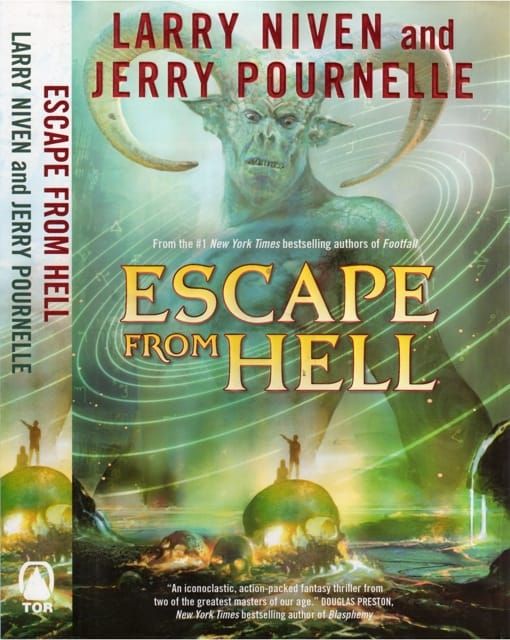
    This song could be the theme song of a book series I am currently reading, Falkenberg's Legion, by Jerry Pournelle. The whole series has been collected in an omnibus edition, The Prince. Pournelle started writing the series about the same time Imagine was composed. It was originally straight up science fiction, but it has become alternative history now. It tells the story of an Earth where détente turned into a political alliance between the US and USSR that allowed the colonization of other worlds, but froze Earth into the politics of the 1960s. By the end of the series, 2/3s of Earth's population has become the mob, simultaneously dependent and radicalized. This version of Imagine is what they would play as they burn the cities.

    Saturday
    Jan292011

    Tax Rates

    Since it is tax season, it is instructive to look at historical tax rates in the US. DarwinCatholic made a quick and dirty inflation-adjustment to the base tax tables from 1955 and compares them to 2010. There is clearly a lot more to be said on this subject, the details probably matter. However, when it comes down to it, the nominal tax rate is far less now than it was 55 years ago.

    This reminds me of something that John Reilly is often saying. There really is no more room to cut the tax rates in the US. The working classes pay very little, if any federal income tax. That was already done in the Reagan administration. Really what we need to to tax more and spend the same. Moderate levels of taxation do seem to work pretty well. Tino at Super-Economy looks at the relative state of the Swedish economy over the last sixty years versus the overall tax burden, and there does seem to be a sweet spot in the middle for the best economic performance.

    Thursday
    Dec092010

    Rationing

    The Derb says:

    There are many ways to ration a service. You can ration it by expense, excluding those who can't afford it. You can ration it by fiat, excluding applicants according to some set of rules administered by gatekeepers. Or you can ration it by complexity, paving the access path to it with tests of intelligence, patience, and persistence, thereby excluding applicants who are less well-equipped with those attributes.

    The latter method has become the preferred ratoining method of the American republic, probably for the reason that great numbers of people feel that intelligence, patience, and persistence are infinitely malleable.

    Thursday
    Nov252010

    Going to Vahalla for Sure

    Matt Briggs pointed me to this article about the remarkable death of Don Alejo Garza Tamez.

    One of the cartels had demanded that Garza give his ranch to them. He flatly refused. He gave his workers the day off, and fortified his home. When armed men surrounded his house the next day, he was prepared. He fired, killing four and wounding two before he was killed himself, an excellent performance against superior numbers and firepower.

    Garza's death illustrates the dilemma of an armed citizenry. In a place like Northern Mexico where the cartels are powerful, armed resistance can be expected to be rewarded with death. Or worse, and more effective, they will just kill someone you care about who is an easier target. Garza apparently decided that he had nothing to lose that wasn't worth it.

    Sunday
    Mar282010

    The Reversal of the Great Risk Shift

    John Reilly has an excellent post up about the recent federal health care bill.

    The enactment of the new federal health-insurance system this week marks the beginning of the reversal of the Great Risk Shift that has characterized American society since the late 1970s. There is now reason to hope that American society can return to something like its historical condition, in which it was possible to change jobs and geographical location without taking your life into your hands. Wages may again be able to rise, since all new money that becomes available for personnel costs will not automatically be eaten by insurance-premium increases. More generally, the subtle loss of morale generated by a system that, for the first time in American history, made a physical necessity problematical will begin to abate, with a consequent rise in personal initiative and national cohesion.

    Like Reilly, I too am sanguine about the effects of the passage of this bill, and I see it as an ultimately positive development. This may seem a little strange, because by political temperament, I ought to be bitterly opposed to this enterprise. However, John Reilly was instrumental in convincing me otherwise. He is one of the most reasonable men I know, and he exemplifies the virtue of hope, which makes for a critical difference in perspective.

    Reilly has been making the argument that a reform of the health care system in the United States will be a liberation. His reasons for saying so are fundamentally conservative, which annoys pretty much everyone involved, but I believe he is on to something. He has been arguing that the current system limits our free market system by tying people to their jobs which offer good benefits, and making businesses bear the brunt of funding health care, when our foreign competitors do not need to do so. He also insists that health care is not a right, and cannot be. It is rather a matter of public order and entirely practical. Rights-talk is far too absolute to be productive.

    One of the chief difficulties with the American system is its opacity. The quality of the health care is really quite good, and it is a vicious calumny to say that the uninsured have no health care in America, rather, they get all their care at the Emergency Department, which is both expensive and inefficient. The rub here is that the people who don't have insurance often wouldn't go to the doctor until they are really sick anyhow, so there is only marginal improvement to be made here. From my time working in the local hospital, I know that the truly poor often simply don't pay their medical bills, which means the service is subsidized by those of us who do pay. It would be better if we did this up front, instead of persisting in sending overdue notices to people with no means or intent to pay anything.

    The pricing is the really bizarre thing. If you look at a bill for any medical service, you see a ridiculous value that is invariably cut by half or more if you have insurance, but it is nearly impossible to find out what this value is beforehand. The actual cost of medicine in the US is practically a trade secret. Billing codes are actually copyrighted by the American Medical Association, and guarded fiercely. The Magistra needed hand surgery recently, which was covered well by my excellent insurance, but we actually were unable to find out beforehand how much it would cost.

    No business can run this way. Not only can you not determine the cost beforehand, the matter can take 3-6 months to be paid in full. Costs would go down in American health care if only the accounts receivable were smaller! One of the best experiences I ever had was when I went to the ED and forgot my insurance card. When I got the bill I forwarded it to my insurance company, and then I paid the negotiated price directly and got reimbursed. I carry a large savings balance, so this kind of thing is easy for me, but if this is the best to offer the system needs work.

    Since I work in the medical device industry, I know that the prices that the manufacturer ultimately sells for in different countries are not all that different. The US is the single biggest medical market in the world [followed closely by Japan], but medical devices still make plenty of profit in the various and sundry health care systems in the rest of the world. I have to laugh when the claim is made that switching to some kind of national health care system in the US will inevitably stifle creativity and innovation. It is certainly possible, depending on how stupid the system is, but all medical device manufacturers compete globally, with a majority of our customers being in allegedly stifling systems already.

    The pharmaceutical companies may be in a different boat. I've been of the conclusion that Big Pharma is in trouble for a while now. Actual innovation there is slim, most recent drugs seem to have worse side effects than the things they treat, and R&D costs are ridiculous for new drugs. Don't mistake me, R&D on a medical device can easily cost hundreds of millions of dollars, but I think the results are actually better, and you don't have to worry about generics stealing your market once the patent runs out.

    There is a lot of room for cost-improvement in the American health care system, but the really interesting thing is that this political development will not result in creeping socialism, but rather presages the return of a more traditional society. The Age of Autonomy, and both right- and left-libertarianism is ending.

    Saturday
    Feb202010

    State law to determine presence of guns in national parks

    I think my title is more descriptive than the one MSNBC chose, New law allows loaded guns in national parks, but their title is accurate, if incomplete. I rather doubt that this will do much to noticeably change the crime rate in National Parks, for the same reasons I've noted before. In Arizona especially, this primarily affects concealed carry permit holders, who are an exceptionally responsible and law-abiding group of people. There really isn't any other reason to take loaded weapons to Grand Canyon National Park than concealed carry for self-defense, since hunting is not allowed in any National Park.

    Really, this law just allows state law to take precedence. The MSNBC article says that the legal climate shifted abruptly in 2008 with District of Columbia v. Heller, but really this all was a long time coming. The balance of legal opinion in the US seems to favor increasing individual autonomy wherever possible, and despite the more extravagant claims of some, constitutional jurisprudence really does focus on the Constitution. Thus we cannot really consistently limit 2nd Amendment freedoms more than the freedoms guaranteed by the other Amendments. It has always surprised me a bit that there is a cultural divide between the ACLU and the NRA on this issue, because they are really making the same argument.

    Tuesday
    Jun022009

    Peace academies