Blogroll
Contact
This form does not yet contain any fields.
    Holger Danske

    Holger Danske

    Entries in Metahistory (6)

    Sunday
    Oct232011

    The Price of Democracy

    For many of us, democracy is seen as an unalloyed good, the only conceivable form of government. However, history tells us that all forms of government have their day, until they are swept away when their characteristic excesses become unbearable.

    Ross Douthat reminds us that democracy and nationalism are a particularly potent combination:

    More important, though, this is a familiar story for the modern world as a whole — a case of what National Review’s John Derbyshire calls “modernity versus diversity.” For all the bright talk about multicultural mosaics, the age of globalization has also been an age of unprecedented religious and racial sorting — sometimes by choice, more often at gunpoint. Indeed, the causes of democracy and international peace have often been intimately tied to ethnic cleansing: both have gained ground not in spite of mass migrations and mass murders, but because of them.

    It is easy to forget that German people lived everywhere in Eastern Europe until Stalin sent them all packing. Once they were all gone, there wasn't as much to fight about anymore.

    Volkdeutsche

    Sunday
    Oct162011

    The True Complexity of Civilization

    Sunday
    Oct162011

    Forsake the Sky Book Review

    by Tim Powers
    $3.50; 217 pages 

    Forsake the Sky is an updated version of The Skies Discrowned, Tim Powers first book. I am a big fan of Power's early work. I enjoy Forsake the Sky and Dinner at Deviant's Palace more than Earthquake Weather. The earlier books are short and tight, albeit sometimes less polished.

    Forsake the Sky is set in a futuristic end-of-empire setting. I've long been interested in cyclical theories of history, and doubly so in fiction, because the rise and fall of empires makes for a cracking good yarn. This is more of an adventure story than one of Power's typical secret histories. And what an adventure it is! Francisco de Goya Rovzar finds himself unjustly imprisoned and sentenced to hard labor in the uranium mines before the first chapter is over. Rovzar escapes, finds refuge in the criminal underworld, and works his way to the top. Classic stuff here, the hero's journey, with Power's characteristic themes of providence and the true price of adventure.

    This is a great book.

    My other book reviews

    Saturday
    May282011

    The Imperial Turn

    From Steve Sailer's post on the possible link between less lead in our environment and a drop in crime:

    My impression is that popular culture today has gotten rather authoritarian or militaristic. Cops used to be portrayed as big dumb Irishmen, easy to outwit. But now, they're portrayed as practically Seal Team 6, with lots of cool weapons and training. Authority has most of the glamor these days, while criminals seem like losers.

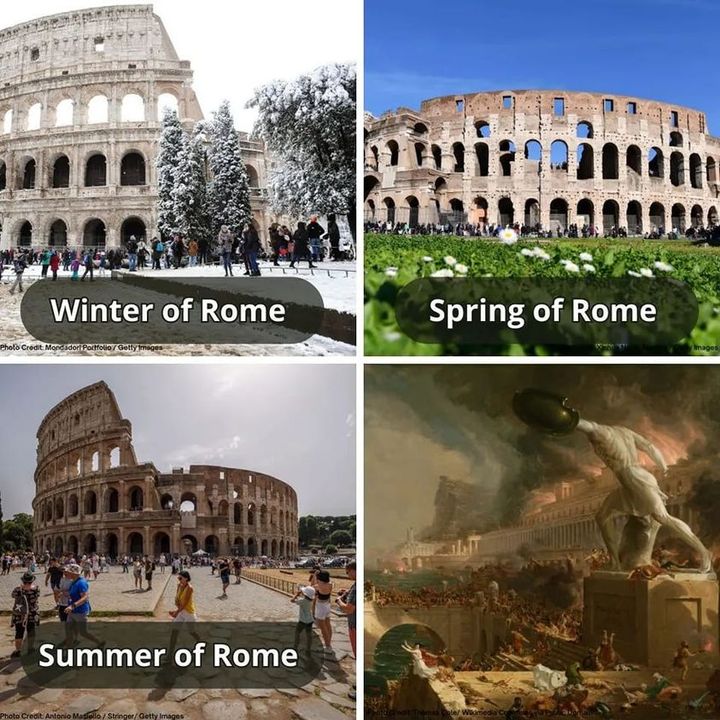
    We're a bit early for it yet, but the early Empire is quite popular after the time of troubles.

    Thursday
    Jun032010

    That's what happens when you drink the Kool-Aid

    John Walker reviews Janon Lanier's You Are Not a Gadget to hiliarious effect.

    I've long been a skeptic of the kind of technological libertarian fantasy world that is exemplified by Glenn Reynolds' Army of Davids. It all seems rather silly to me, but it is deeply appealing to a lot very bright people. These people are busily working to make this fantasy happen, come hell or high water. This book is the result of disillusionment with this vision.

    Next, the focus turns to the cult of free and open source software, “cloud computing”, “crowd sourcing”, and the assumption that a “hive mind” assembled from a multitude of individuals collaborating by means of the Internet can create novel and valuable work and even assume some of the attributes of personhood. Now, this may seem absurd, but there are many people in the Silicon Valley culture to whom these are articles of faith, and since these people are engaged in designing the tools many of us will end up using, it's worth looking at the assumptions which inform their designs. Compared to what seemed the unbounded potential of the personal computer and Internet revolutions in their early days, what the open model of development has achieved to date seems depressingly modest: re-implementations of an operating system, text editor, and programming language all rooted in the 1970s, and creation of a new encyclopedia which is structured in the same manner as paper encyclopedias dating from a century ago—oh wow. Where are the immersive massively multi-user virtual reality worlds, or the innovative presentation of science and mathematics in an interactive exploratory learning environment, or new ways to build computer tools without writing code, or any one of the hundreds of breakthroughs we assumed would come along when individual creativity was unleashed by their hardware prerequisites becoming available to a mass market at an affordable price?

    A lot of this probably comes from the perfectly understandable mistake of thinking that everyone in the world is exactly like you. There are worse things to think about other people, but the vast majority of people in all times and places probably prefer the easy life and the tried and true instead of the hard work and intense mental effort required to do the things that were supposed to happen after the advent of the Internet.

    Another monkey wrench in the works is the modern age is ending, and the rapid ferment that characterizes modernity is ebbing as well. Lanier laments, “It's as if culture froze just before it became digitally open, and all we can do now is mine the past like salvagers picking over a garbage dump.” This is to be expected, the culture of the West is fossilizing, in the sense Spengler meant. Rapid change and immense instability go hand in hand, and the mass of mankind get tired of the latter after a while, so things slow down again. This isn't really bad, just different.

    Saturday
    Nov282009

    The Transition to a Traditional Society

    Since I have an interest in the metahistorical theories of Spengler and Toynbee, I have an expectation that modernity is close to its natural end. Not forever, just for now, because modernity is not unique, but is something that reoccurs in human history. My friend John Reilly has noted that the transition to a traditional society that occurs at the end of modernity is the triumph of the economic left and the social right.

    What he means by that is the social safety net becomes more important than economic efficiency, and traditional morality becomes unquestionable again. If you want to see why this is the case from an economic point of view, you should read this post by John Michael Greer. Greer provides historical arguments bolstered by economics, or the other way round. I especially like them because Greer points to the value of public order for the proper functioning of society, and that this public good is only provided by the government.

    Greer analyzes the value of the medieval guild system as a bulwark against starvation, but also as the economic engine that provided the innovations that modernity depended upon. Ensuring that the common good was served by a sufficient quantity of skilled labor was the gift of the guild system. The guild system is inefficient from a modern perspective, but it also guarantees quality and provides sufficient leisure for the most skilled technicians to be able to concentrate on new ideas.

    Greer is coming at this from the point of view of a committed proponent of Peak Oil. I remain less than convinced by the Peak Oil hypothesis, which seems to be a case of mistaking the map for the territory, but I find it interesting that Greer is describing a state of affairs that has been predicted by other men long ago. The final state of society after modernity has ended seems to have an inevitability that transcends the mechanism posited to cause it.

    h/t Jerry Pournelle's Mail